A Field Study of Religion, Coexistence and Capabilities in Bhojpur’s Community Schools
Authors: Yamuna Basnet, Binayak Krishna Thapa
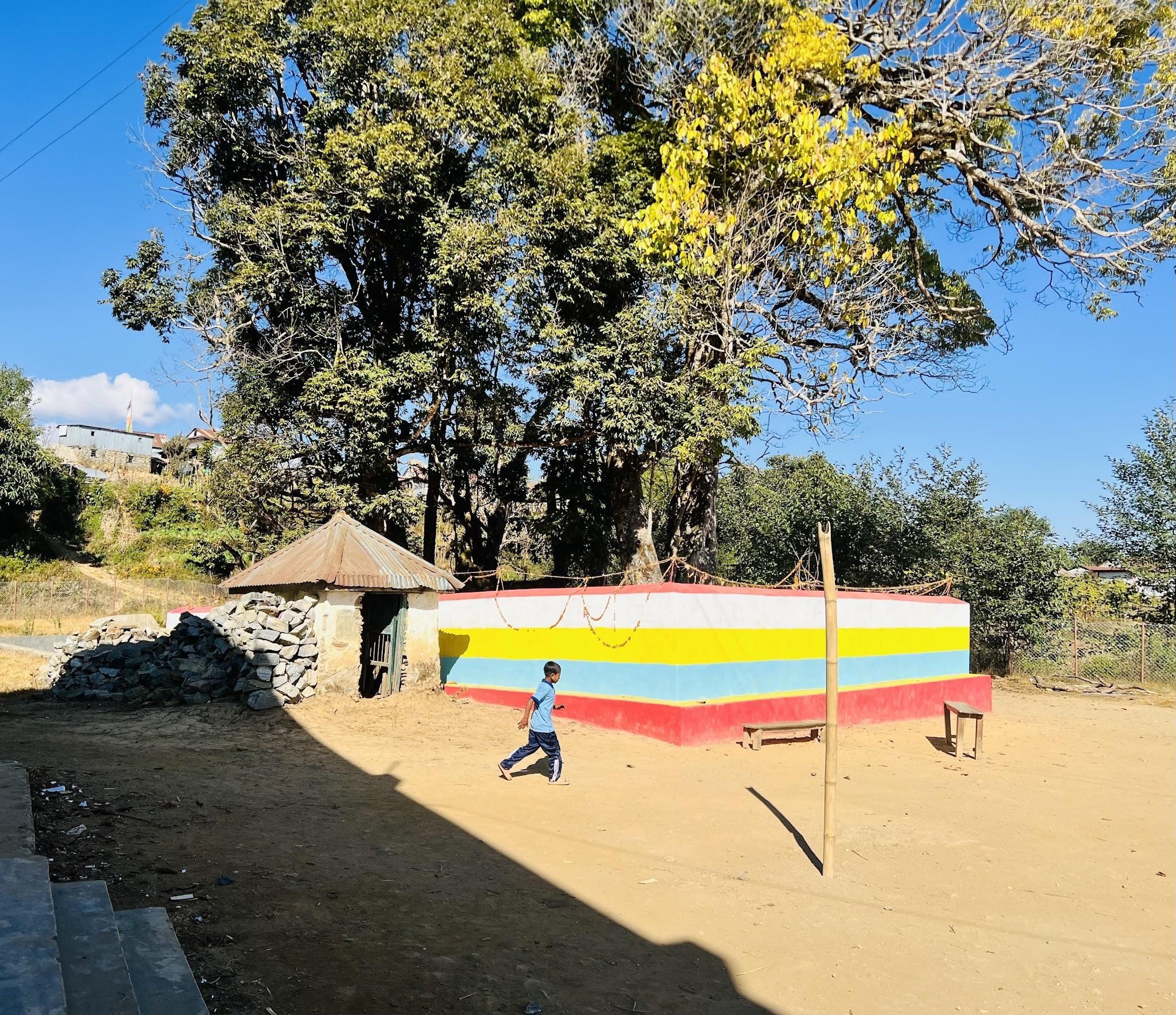
As part of our field work, when we went to Bhojpur, our project site, to scope out the situation of the community schools in the area, we immediately noticed the school structures consisting mostly of tin roofs, a packed earth courtyard, and a flagpole that catches the light before anything else does. To get there, most of the school children would have to pass a religious shrine of some kind: maybe a small stone platform under pipal trees, a Buddhist altar or gumba on the way, or maybe the Siddhakali temple near the bazaar if their walk takes them that way. And if none of these apply, they will almost inevitably find a small temple dedicated to goddess Saraswati inside the school premises itself. In all probability, none of these children really stop to think about it, as it is simply part of their daily walks, the same way a small stream or a ridge might be.
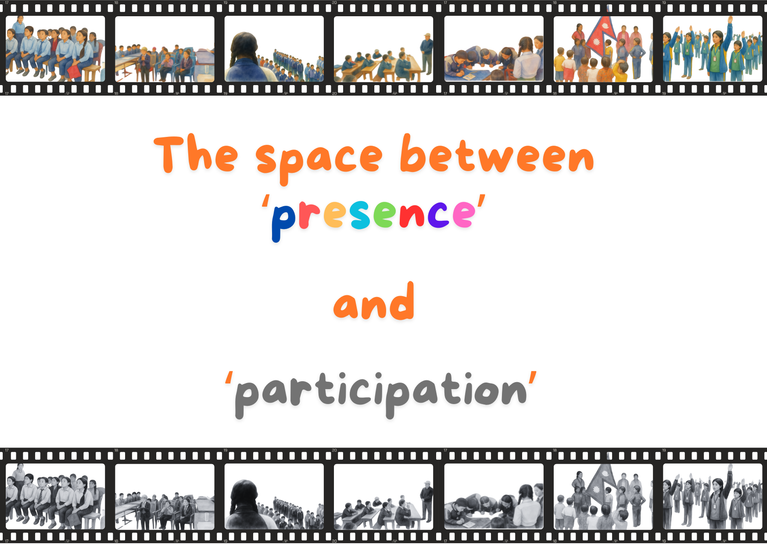
By 10.00 am, we see these students from different hamlets come to their respective community school to learn their daily lessons. A day at school for any student, irrespective of age, gender, class, grade, or ethnicity, begins with an ‘assembly’. Assemblies are a regular practice in most schools, where the students are required to gather in a class by class lines, and engage in different activities such as prayer, speech, quiz or even performance before they head to their respective classes. Practised every single day, it is not just a case of students assembling to receive instructions, or even general news for the day, but rather, a space for active participation, where one’s performance could be valued and even awarded. These sorts of assemblies are seen in almost all schools, both public or private, and it is also an inclusive space, where all the present students participate. Termed as prarthana sabha or ‘prayer assembly’, they appear to act as a knot between schooling and religion in this regard.
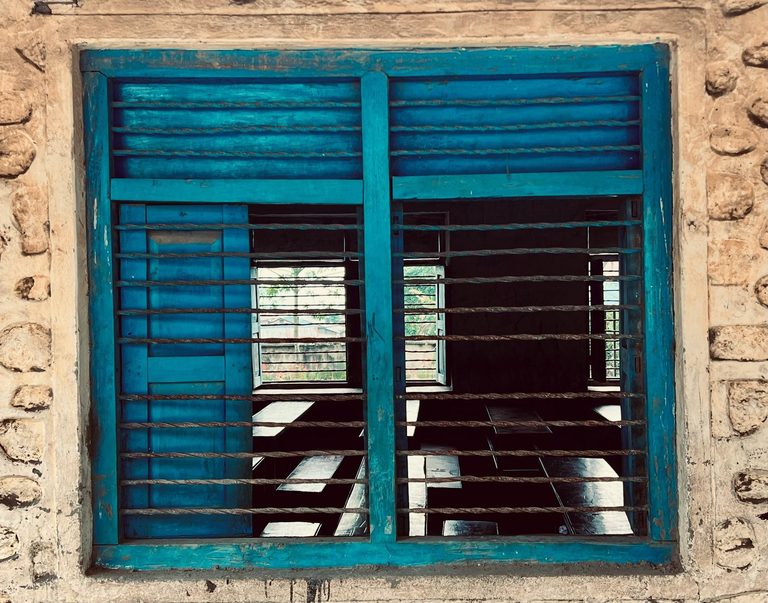
When we venture inside the school compounds, the same layering continues. A Chhetri child sits next to a Rai child, a Tamang child sits next to a Dalit child, a Newar child sits next to a Madhesi child, all copying the same mathematical formula the teacher has written in the class blackboard. On Saraswati Puja, the whole school, regardless of them being Hindu, Buddhist or Kirat, line up to worship their own books and pens and receive a handful of buniya (a traditional sweet made from fried chickpea flour pearls soaked in sugar syrup), because the goddess of learning is understood to belong to the classroom more than to any one faith. As Dashain season rolls around, the school courtyards are filled with marigolds and the excited chatter of children discussing the amount of money they received from their elders. When Sakela season comes, the courtyard fills after school hours with the same drumbeat that draws Rai families to Tudikhel style gatherings across the hills.
In their work on development and ethics, authors Deneulin and Zampini-Davies build their argument on a simple claim: religion is not a private footnote to a person’s real life, but rather a force that shapes how they treat their neighbours, their work, and their world. They lean on Martha Nussbaum’s insistence that the freedom to express one’s faith belongs among the small number of capabilities every person should be guaranteed, and not as a bonus once school enrolment and literacy rates are sorted, but as part of what a decent life is really about. When children in community schools in Bhojpur were asked what religion meant, they talked about honesty, about helping a classmate, about not hitting or excluding anyone, and about the Chandi dance the kinfolk perform. It was also about how a child shared her tiffin with a friend of a different caste, how someone got picked for the festival dance, and whether the boy who followed a different faith still got invited to sit at lunch. That is what the Capability Approach means when it says a good life has to be judged not by private belief alone, but by what that belief actually lets a person do inside a classroom, a courtyard, or a friendship.
During our series of focus group discussions, the gendered experience of these values became clear, yet the underlying desire for harmony was near universal. The boys spoke of temple festivals and Chandi dances in the same breath as respecting other faiths and not letting religious differences turn into a fight at school. Girls spoke of worship and visits to religious places alongside a firm refusal to accept discrimination including old, painful practices like untouchability among classmates. None of them described religion as something that separated who sat where in the room, and it was one thread among many in a much larger, ordinary school day self. However, actually translating these values from discussions into daily habits is where the complication starts.
On connecting it with literature, the aforementioned authors have also shared an interesting story about a sower scattering seed on a path, on rock, into thorns, and finally into rich soil. The seed is identical wherever it lands, and the only difference is the ground. When we conducted a baseline survey a few months after the group discussions, the survey results revealed a gap between the findings of the two. Children could name moral values like honesty, kindness, fairness and respect fluently. They could also describe their festivals with absolute affection, yet when it came to actually practising those values day to day, or making it to a place of worship, those sentiments came up a little less often than the reciting and celebrating, and the scores dropped noticeably as well. If we were to look at it from the perspective of the story of the sower and the seed, a value introduced in a classroom, or spoken aloud in a school discussion group is still only a seed at that point. What happens to those values after the school bell rings, and whether it takes root or not depends on the ground a child walks home into: a household’s default habits, how far the nearest shrine is from the front door, whether a family has the time or priority to make the visit at all. Even though the lessons taught are the same for every child, the walk home is definitely not.
Nussbaum’s whole framework rests on genuinely respecting religious differences, and refusing to let one tradition’s idea of the good life crowd out anyone else’s. Pope Francis’s Laudato Si‘, also calls for the same thing on a larger scale, i.e. creating dialogue between traditions rather than a hierarchy among them. The children we surveyed seemed to almost be living this rather than arguing for it in the smallest and most concrete ways a school day allows them. They spoke of not interfering with a classmate’s worship, of treating everyone equally regardless of what shrine their family visited, of stopping a disagreement before it turned into exclusion. Our wider survey backed this up, showing that the vast majority of the children feel free to practise their own religion and to respect the religion of the friends and teachers sitting beside them, without being singled out for the difference. In the language of the capability approach, the religious identity and freedom is not just being allowed to believe something quietly at home, but also about being able to carry that belief into a shared classroom and have it coexist, unremarked and unpunished, next to someone else’s.
Note: This blog is an output of the project titled ‘Promoting Gender Equality and Social Inclusion in Schools: Building on What Children Value and Aspire to Do and Be,’ implemented by LIKE Lab, Kathmandu University School of Arts, with support from the Global Partnership for Education and Innovation Exchange (GPE KIX) and the International Development Research Centre (IDRC).
Disclaimer: The views and opinions expressed herein do not necessarily represent those of the International Development Research Centre (IDRC) or its Board of Governors.