Authors: Yamuna Basnet, Binayak Krishna Thapa
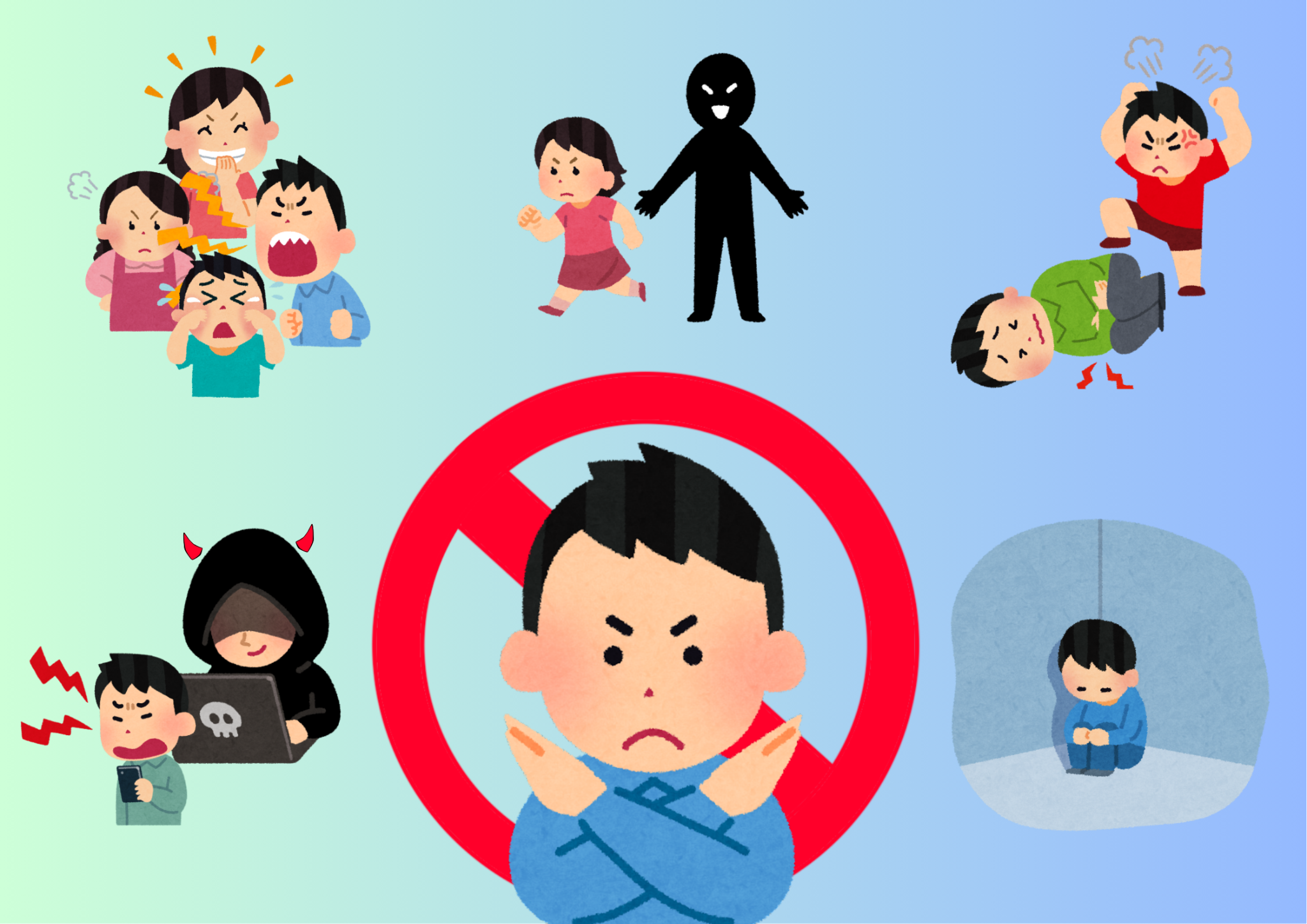
This blog attempts to capture a complex phenomenon as is generally understood and experienced by children of school-going age in public schools, such as hostility, violence, unfriendly school environments, and bullying. These are pressing issues faced by children and adolescents in public educational settings in Nepal, where the data shows that almost 51% of children reported having experienced such incidents. Such bad experiences have had negative impacts on children’s mental health, triggering suicide attempts, absenteeism, fear, anxiety, and school truancy. In our endeavor to examine children’s well-being, we borrow the concept of “bodily integrity” to evaluate students’ ability and choice to stay physically unharmed, express if the experience of bullying prevails or if any attempts at physical harm were made, and their awareness of the legal frameworks for children, child rights, protection policies, and practices.
The groundwork towards conceptualizing “bodily integrity” by Martha Nussbaum focuses on freedom of movement, security against assault, and opportunities for sexual/reproductive choice; this concept has been borrowed, expanded, and used for concerns of children in educational settings by Ingrid Robeyns, Mario Biggeri, Melanie Walker, and Elaine Unterhalter. To start with Robeyns, discussion on bodily integrity concerning children should be done through a pragmatic and non-paternalistic lens. For her, evaluating a child’s bodily integrity means assessing whether a child has the real opportunity to be safe from violence and corporal punishment. For Biggeri, bodily integrity is more than just the absence of physical harm or outright abuse; he suggests children should have the ability to identify what physical security is and the importance of freedom from violence, and even prioritizes the ability to play safely. He suggests these abilities should count as bodily integrity too. Further, Walker uses this domain to address gender-based violence, bullying, and corporal punishment in schools. While adopting this concept in her research, Walker evaluates the school environment to assess safe transport to school, bathrooms that are safe and private, and classrooms free from physical intimidation. Lastly, we bring in Unterhalter’s work, where she views this concept through a structural and gendered lens. Her work engages the intersection between social norms, laws, and institutional practices to see whether these enable or constrain children in educational settings.
During our initial disaggregated Focus Group Discussions (FGDs), girls spoke at length and used language like “good touch and bad touch”, referenced legal action, talked about organisations that help women, and articulated the right to say no when uncomfortable. By contrast, boys spoke in shorter and more concrete terms like: avoiding fighting, protecting yourself, informing the teacher, and contacting the police. Their language centred more on physical conflict, attack prevention, and social harmony, and notably, not a single boy in the focus groups mentioned awareness of rights or legal action as part of their understanding of bodily integrity.
Girls appear to have a more institutionalised and rights-based thought process about bodily safety, possibly because programmes targeting gender-based violence, consent, and bodily autonomy have historically always been directed at girls. Boys, meanwhile, have been given a physical vocabulary: fight less, protect yourself, and avoid danger. It implies that boys think of safety as a matter of personal behaviour and social negotiation, but also hints towards their unawareness about the fact that their body has rights, that they may also be vulnerable, and that systems exist to help them when those rights are violated. In a society where boys also experience abuse, coercion, and institutional violence, and where gender norms actively discourage them from naming or reporting these experiences, the absence of rights in the boys’ understanding of bodily integrity is concerning. If bodily integrity, in law, rests on consent and inviolability, then a child who has not been taught the concept of consent is a child who does not fully possess the protections that concept is designed to offer him.
The most significant finding in FGDs was that the majority of students, both boys and girls, interpreted bodily integrity through the lens of health, hygiene and self care. Brushing their teeth, cutting their nails, eating nutritious food, avoiding junk food, taking medicine, keeping their surroundings clean, traffic safety, disease prevention. While all these are technically not “wrong answers” since they reflect a genuine and important understanding of the body as something to be maintained, cared for and protected, they are not what our survey was aiming to measure. We hoped to understand their understanding of violence, bullying, abuse and legal rights, but the students answered a different question entirely.
Rene Descartes, the seventeenth century philosopher, proposed a separation between the mind and the body. In his account, the body was a kind of machine governed by mechanical laws, which was observable, manipulable and a system to be understood from the outside. The thinking self, or the mind, was something apart. When children in Bhojpur describe bodily integrity as eating well and brushing their teeth, they are in a sense, unknowingly operating within the Cartesian school of thought. While the systems that they are a part of (both social and institutional) has helped them understand that their bodies are physical structures that require upkeep, they seem to be lacking the insight that the body is not inseparable from the person, and that what is done to their body is done to them. The conceptual shift of looking at the body as a health object to that of the body as a rights bearing self is precisely what rights education is supposed to accomplish, and our findings from Bhojpur suggests that it has not yet happened for most of these children. It hints towards a concerning curriculum gap and in a context where discourses about bodily integrity have not yet fully reached children’s everyday vocabulary, we cannot be surprised that the children reach for the closest substitute to “fill” the gap in their understanding.
This conceptual gap where safety is experienced but not structurally understood is precisely what was quantified during our subsequent survey of 380 students across Grades 1 to 10. In our indexing of their scores (rescaled to a maximum of 6.25 for analytical consistency), we saw that the children, in aggregate, scored their bodily integrity well-being freedom 5.27, their well-being achievement 5.23, their agency freedom 5.27, and their agency achievement 5.29.
Aggregate numbers also have a way of telling comfortable stories. On a scale of 6.25, scores like 5.27 and 5.23 may not appear that concerning, but when we disaggregate the data by gender, the underlying numbers present us with a more contemplative picture. The highest scoring indicators were all variations of the same feeling: I am safe, I feel safe, I believe I can feel safe. By contrast, the lowest scoring indicators were all about doing something when safety breaks down. In law, bodily integrity has a precise definition of “the body being undivided, whole, and not touched without consent”. It is a concept rooted not in the absence of illness, but rather, in the inviolability of the person. In this framing, the law does not simply ask if you are currently unharmed. It asks whether your right to remain unharmed and your right to respond when that right is violated has been protected. In that sense, feeling safe and having that right genuinely protected are not the same thing.
This distinction between being safe and being capable of responding when unsafe is precisely why many scholars within the Capability Approach have insisted on putting bodily integrity at the very centre of what it means to lead a fully human life. As noted earlier, treating Nussbaum’s definition of bodily integrity as a non-negotiable capability means that one cannot meaningfully exercise their capability for education, affiliation or political participation if the sovereignty of their bodies cannot be guaranteed and defended. Therefore, our study in Bhojpur uses this same framework: measuring not only well-being achievement and freedom, but also agency, or the capacity to act on one’s own behalf. Since the above data is a baseline, it is the beginning of a conversation, not the end of one. The question now is what we do with what the children have told us and whether we are prepared to give them not just protection, but the tools to protect themselves.
Note: This blog is an output of the project titled ‘Promoting Gender Equality and Social Inclusion in Schools: Building on What Children Value and Aspire to Do and Be,’ implemented by LIKE Lab, Kathmandu University School of Arts, with support from the Global Partnership for Education and Innovation Exchange (GPE KIX) and the International Development Research Centre (IDRC).
Disclaimer: The views and opinions expressed herein do not necessarily represent those of the International Development Research Centre (IDRC) or its Board of Governors.