Author: Utkrishta Sharma | Junior Researcher, LIKE lab
Scaling educational initiatives is often reduced to expanding reach and replicating models that have already shown positive outcomes elsewhere. But scaling involves more than replication alone. In practice, scaling is a complex and context-sensitive process shaped by partnership, collaboration, inclusion, and even healthy competition among diverse actors (Gargani & McLean, 2017). Central to this process are individuals who play influential roles in ensuring that initiatives expand, adapt, and are sustained in ways that remain locally relevant.
This is where influential individuals, often referred to as scaling “champions,” step in.
Scaling champions are individuals who enable education initiatives to grow in ways that last. Their role goes beyond supporting expansion. They help the initiatives adapt to different contexts and remain relevant as they scale. Often having experienced the innovation themselves as implementers, beneficiaries, or both, scaling champions work closely with peers and fellow participants in the field. This close engagement gives them real-time insight into what is working, what is not, and where adjustments are needed. It also allows them to provide practical, timely feedback that strengthens implementation and supports long-term sustainability (Basuel et al., 2024).
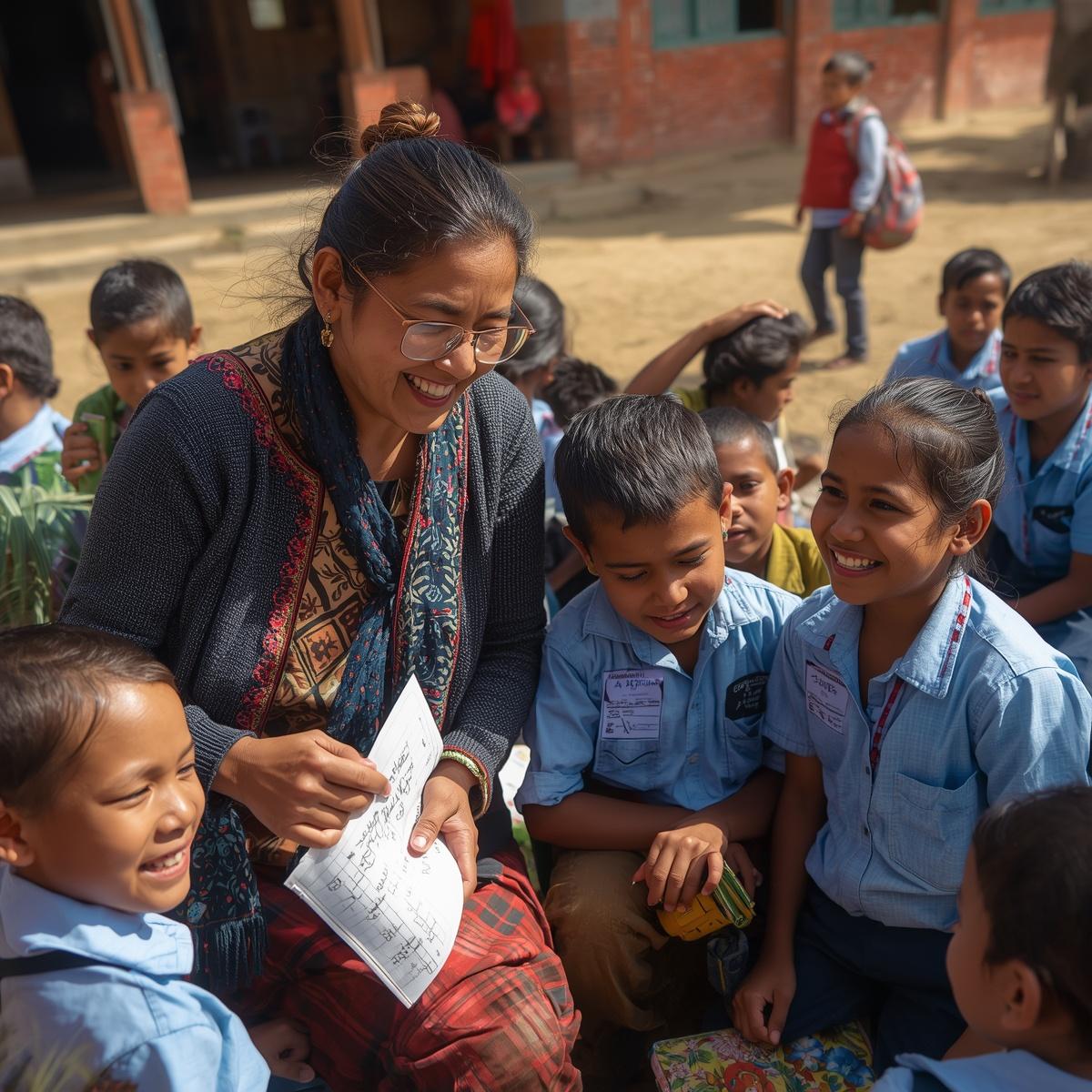
This blog explores how Gender Equality and Social Inclusion (GESI) focal persons are emerging as innovation champions in the process of scaling LIKE clubs (safe, structured, student-led spaces that aim to promote values of GESI among children as well as inclusive learning environments through child-centered, capability-driven activities) across community schools in Bhojpur Municipality, Nepal. This blog is informed by a study conducted under the Learning, Innovation, and Knowledge Exchange (LIKE) Lab as part of the research-for-development project titled “Promoting Gender Equality and Social Inclusion (GESI) in Schools, Building on What Children Value and Aspire to Do and Be.” As part of the project’s extended efforts, LIKE clubs have been established in 13 community schools across Bhojpur Municipality. The initiative plans to expand to an additional 30 community schools by the end of the project in February 2027, reaching a total of 43 schools. Each club is supported by a designated GESI focal person who mentors and guides students in carrying out club activities, helps the initiative take shape within the school, and shares on-the-ground feedback grounded in field realities with project implementers. The focal persons were selected out of the pool of the existing school teachers teaching social science in the selected community schools.
Why Social Studies Teachers as GESI Focal Persons?
In the context of LIKE clubs, social science teachers are designated as GESI focal persons for several important reasons. Their teaching already engages with issues such as local norms, gender and caste dynamics, and child rights. This enables them to extend their professional expertise to support the smooth functioning of the LIKE clubs, helping to guide their day-to-day functioning within the schools. This positions them well to promote GESI values among club members and respond to the challenges students encounter, thereby strengthening the overall implementation of the club. Alongside this, their close interaction with students also gives them a deeper understanding of students’ lived experiences, needs, and concerns, which strengthens their ability to guide LIKE club activities in ways that are responsive, inclusive, and grounded in students’ lived experiences.
Besides this, their position within the school system also provides them with access to everyday realities, including patterns of exclusion across classrooms, peer relationships, and the wider school environment that external implementers may not fully observe. This positions them as important intermediaries, bringing grounded insights that help refine LIKE club activities, which remain in line with the students’ needs.
Also, during the ongoing study, students revealed that they view GESI focal persons as trusted adults and as individuals they can look up to for guidance and support. This sense of trust is further reflected in the project’s baseline findings, which indicate that students generally feel comfortable approaching them with their concerns. They are individuals children can rely on within the school environment. Therefore, project implementers have invested in their capacity-building through participatory training on GESI values, the LIKE club manual, and the LIKE club activity book. This has helped them learn how to operate the clubs and guide students in conducting activities in a structured way within schools. As a result, they have been equipped with the knowledge and skills needed to translate the club’s mission into practice.
In this way, they have been acting as connectors between project implementers and students, guiding club activities while also providing field-informed feedback that supports adaptation, sustainability, and scaling of the initiative across additional schools.
What Makes GESI Focal Persons Innovation Champions?
As LIKE clubs have been operational over the past 10 months since their establishment in July 2025, GESI focal persons’ ongoing interactions with schools and club members have provided them with rich insights into students’ experiences. These close engagements have deepened their understanding of how the initiative is being experienced on the ground, while also strengthening their ability to support its uptake, inform its refinement, and contribute to its continuous improvement across the schools.
This sustained engagement with schools and learners positions GESI focal persons as innovation champions within the initiative. Innovation champions are individuals who have experienced an innovation positively and are motivated to support its wider adoption. They focus on what the innovation delivers in practice and how it can benefit more people, rather than only the problem it addresses (Basuel et al., 2024). Their credibility and close connections within the schools make them particularly influential in scaling processes.
In the LIKE club initiative, the role of GESI focal persons is evident through their consistent, hands-on engagement with students and the school leadership system. By working closely with club members and observing how the initiative functions in practice, they are able to demonstrate its value in concrete and relatable ways. Their position within schools enables them to communicate this value credibly to both students and school leadership, helping to build trust, participation, and interest in the initiative.
As GESI focal persons, they also play a key role in bridging implementation with field realities. Their day-to-day interactions with students allow them to understand how the LIKE clubs are experienced on the ground, including what is working, what challenges are emerging, and how the initiative is evolving across schools. This enables them to bring forward grounded insights that inform ongoing refinement, strengthen responsiveness, and support more effective and contextually relevant implementation of the LIKE clubs.
Beyond this, GESI focal persons also play an important role in supporting the wider spread and sustainability of the initiative. Through structured capacity-building sessions on GESI principles, the LIKE club manual, and the LIKE club activity book, they have developed a strong understanding of how the LIKE clubs function in practice, including key operational processes such as maintaining activity records. This understanding has enabled them to facilitate club activities more confidently and manage day-to-day processes within schools more effectively. They also take part in local learning exchanges, where they share their experiences, reflect on the impact of LIKE clubs, and show how the approach can be adapted in different school contexts. In doing so, they act as resource persons and advocates, helping to expand the initiative while also strengthening local ownership and sustainability.
What This Reveals in Practice?
Therefore, the implementation of LIKE clubs in Bhojpur Municipality highlights that scaling is not only about expansion but also a relational and institutional process shaped by actors within the system. The role played by the GESI focal persons in the LIKE club initiative reflects how school-based professionals can move beyond facilitation to influence how an initiative is interpreted, adapted, and sustained over time. Since the teachers in general play such an important role in bridging the gap and promoting GESI values within the schools, they should be engaged as active champions of the initiative across the schools.
The role of GESI focal persons points to the importance of connecting program intentions with field realities to support continuous learning and improvement of the initiative. When such intermediary and championing roles are recognized and supported, scaling becomes more responsive to diverse contexts, more grounded in lived realities, and more sustainable across settings. By doing this, they help improve the initiative and make its long-term effects on schools stronger. These insights indicate the significant role of GESI focal persons in influencing the scaling of LIKE clubs across schools in context-sensitive and sustainable manners.
References:
- Gargani, J., & McLean, R. (2017). Scaling science.
- Basuel, N., Carter-Rau, R., Wyss, M. C., Elliott, M., Olsen, B., Olson, T., & Rodriguez, M. (2024). Engaging champions for scaling in education.
Note: This blog is an output of the research-for-development project titled “Promoting Gender Equality and Social Inclusion in Schools: Building on What Children Value and Aspire to Do and Be,” being implemented by LIKE Lab, Kathmandu University School of Arts, with support from the Global Partnership for Education and Innovation Exchange (GPE KIX) and International Development Research Centre (IDRC).
Disclaimers: The views expressed herein do not necessarily represent those of IDRC or its Board of Governors.