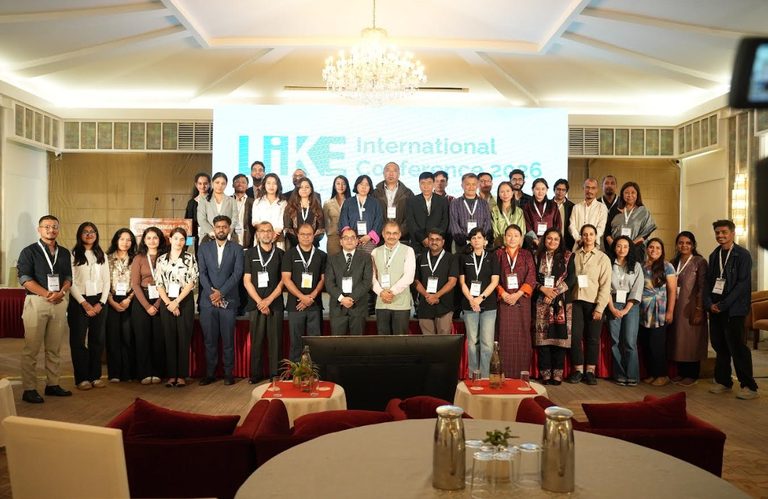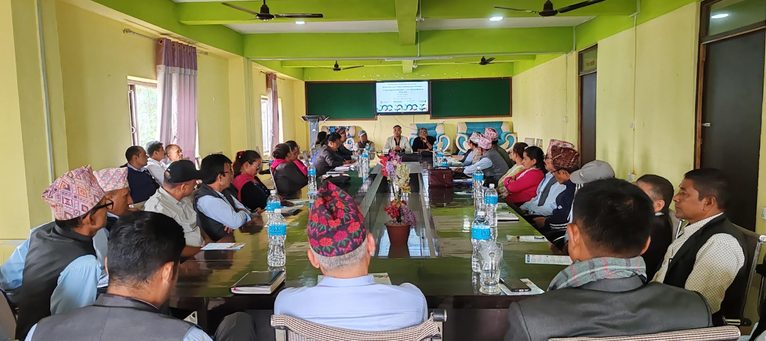
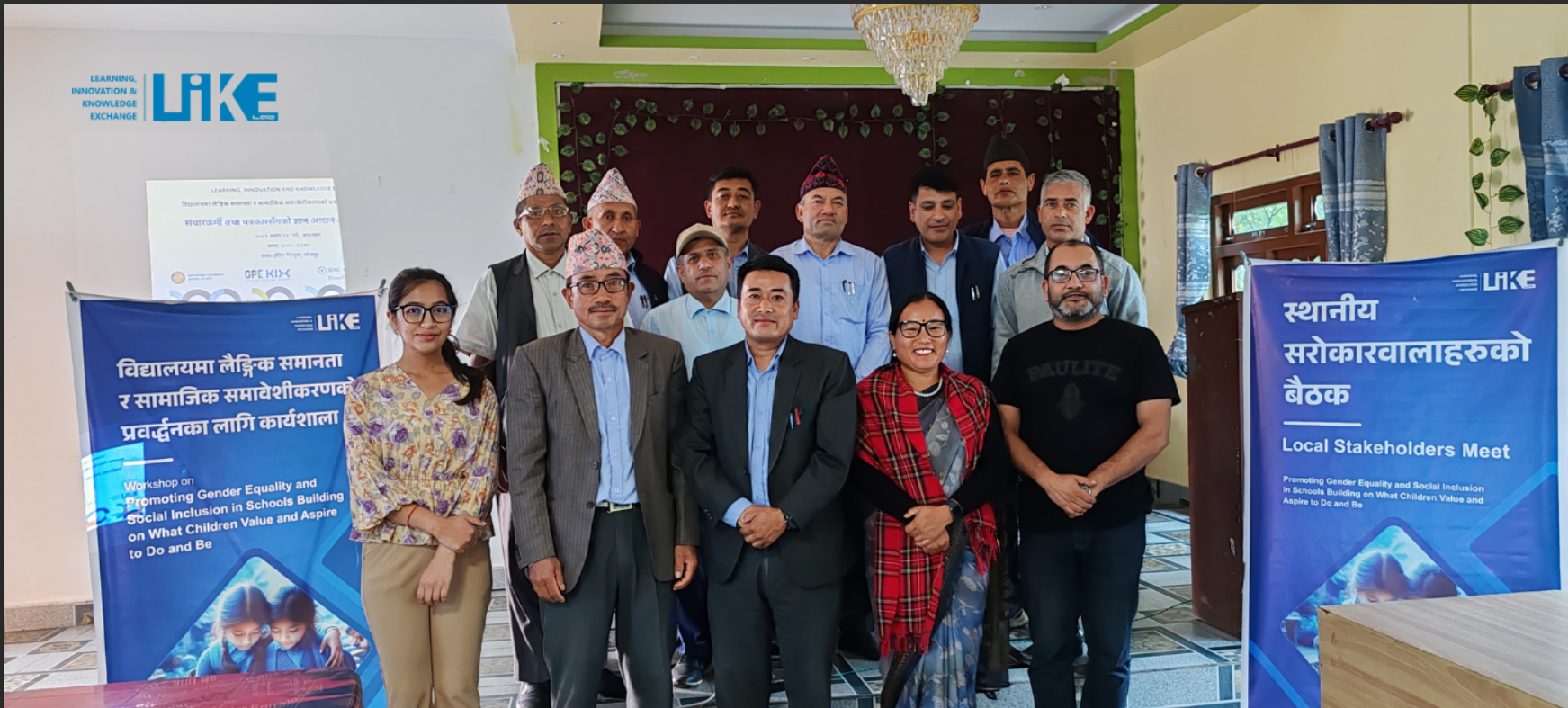
BHOJPUR, NEPAL, JUNE 22, 2026 – The Learning, Innovation and Knowledge Exchange (LIKE) Lab at Kathmandu University School of Arts organized a community-level event under the “Promoting Gender Equality and Social Inclusion in Schools: Building on What Children Value and Aspire to Do and Be (CVEC Project)”. Held at Vintuna Hotel, the session included the attendance of all the Headteachers from the 13 partner schools.
The Knowledge Sharing Program aimed to share the findings of the 2025 Baseline Survey and present the newly created LIKE Club Activity Book video to the educational stakeholders. The event commenced with Mr. Saurav Rajbhandari warmly welcoming the participants and giving a short introduction to the project. He also shared that LIKE Clubs have reached one year of establishment in their schools and that the project aims to further sustainably expand this initiative to the remaining 30 community schools in the Bhojpur Municipality by the end of the project.
The program then moved forward with Ms. Yamuna Basnet giving a brief introductory overview of LIKE Lab and its core values and objectives. She went on to present the findings of the baseline survey conducted in February 2025, which aimed to understand the situations of community schools pre-intervention.
The key highlights from her presentation included:
- The survey methodology and a brief introduction to the Capability Approach as a guiding theoretical framework.
- The two distinct spaces of evaluation which included 1) the assessment of the availability, satisfaction and importance of the resources and 2) the status of children’s well-being and agency
- Findings that noted the infrastructural limitations which included the lack of sufficient sanitary pads and spaces for their disposal, and the school premises not being disability friendly despite stating otherwise.
- The gap between children’s well-being and agency and the factors behind it.
- The segregated results based on gender, ethnicity, and grade.
- Further suggestions moving forward
Mr. Saurav Rajbhandari then presented the latest Activity Book, as well as the 16 Capability videos to the Headteachers to refamiliarize them with the concept and value of LIKE Clubs, and how the club activities can be seamlessly integrated into the existing school curriculum, ECA, and morning assemblies at no cost.
Remarks by the Headteachers
After opening the floor for feedback, the Headteachers expressed appreciation for the presentation, as well as the videos, and raised some important points, which have been listed below:
- The importance of offering in-house training regarding the 16 capabilities to other teachers within the schools and creating a network of teachers and headteachers for sustainability of LIKE Clubs. One resource centre should be established in every ward for the same purpose.
- Students from Grades 9 and 10 need to be paid special focus due to their higher cognitive abilities, and their ability to implement the values they’ve learned more effectively in their lives.
- Children these days are addicted to their cellphones, and creative activities to engage them are of importance in present time. Parents also need to be educated on this matter so that children’s capabilities are enhanced beyond the school’s walls.
Closing Reflections
Dr. Binayak Krishna Thapa, the Principal Investigator of the CVEC Project, thanked the Headteachers in attendance for their valuable suggestions, and stated that LIKE Clubs and the GESI Focal people are all instruments of change to further enhance children’s capacities, as well as their capabilities, and bring about change in society at the grassroot level. He then concluded the session by expressing hope for continued cooperation in the future.