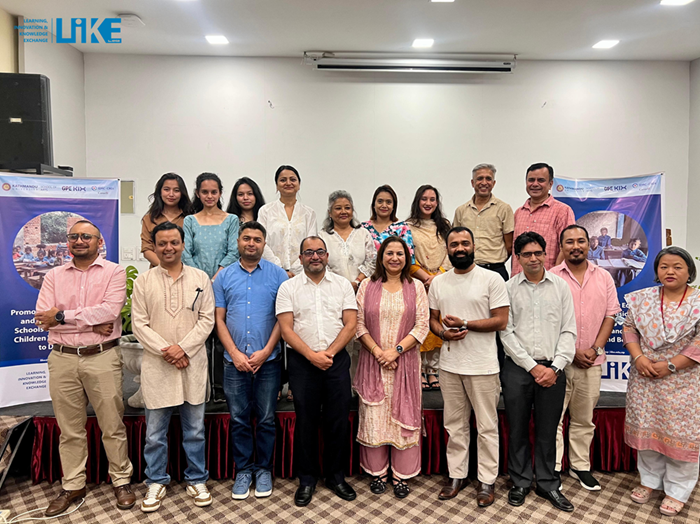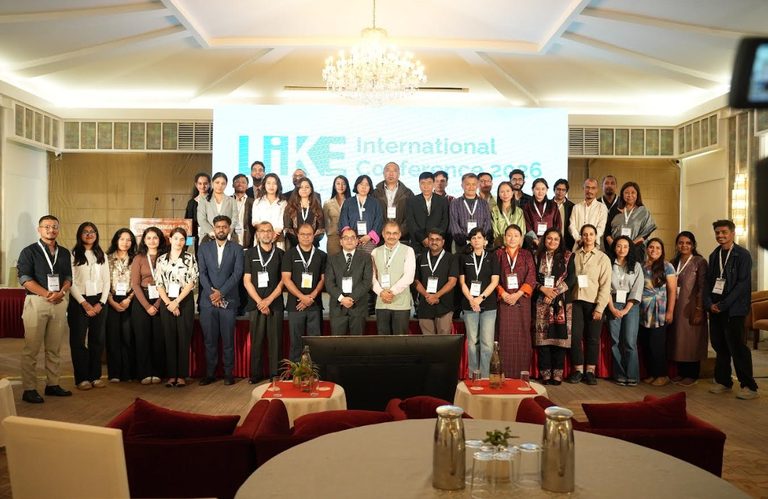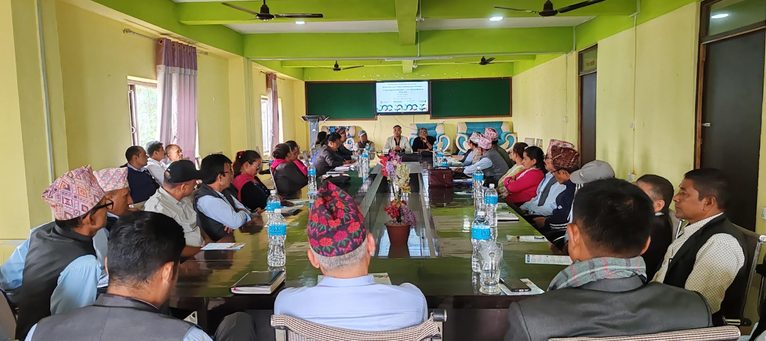
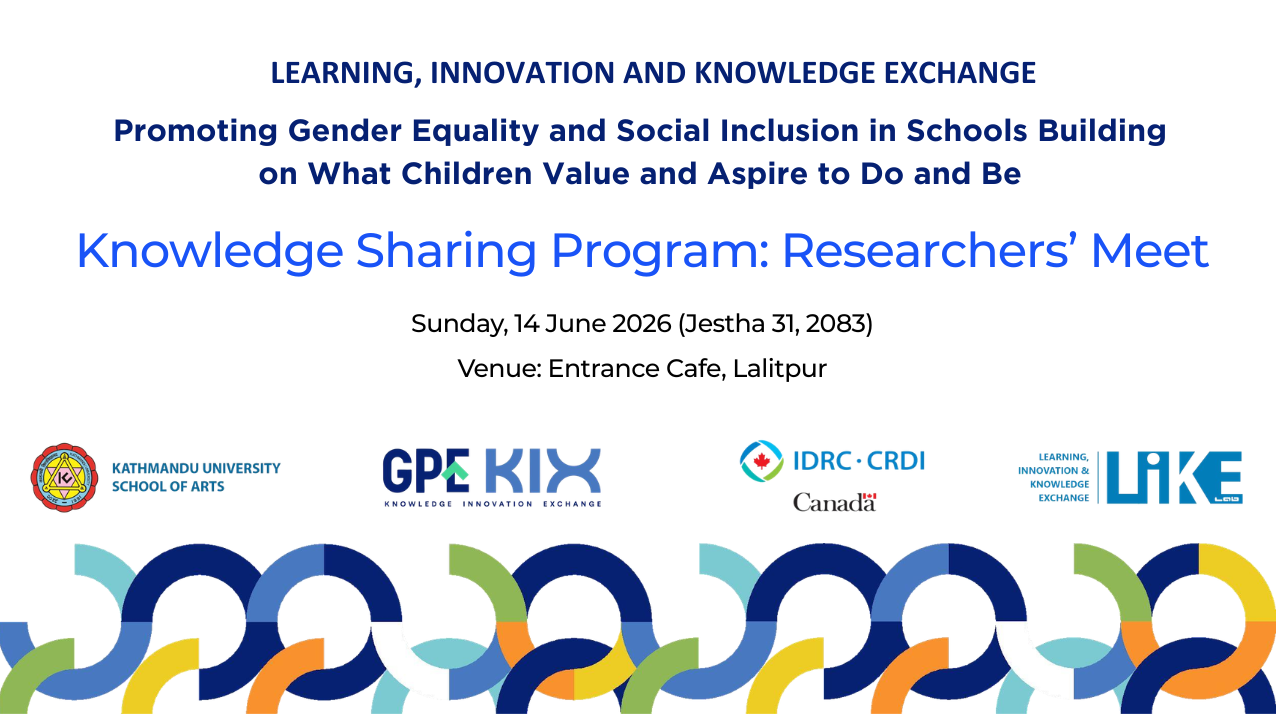
LALITPUR – The Learning Innovation Knowledge Exchange Lab (LIKE Lab), in partnership with the Kathmandu University School of Arts, successfully hosted a Knowledge Sharing Program and Researchers Meet on June 14, 2026, at the Entrance Cafe in Chakupat, Lalitpur. The event brought together a total of 18 participants—comprising nine male and nine female attendees—to discuss the framework and planning for an upcoming international conference. The upcoming conference is titled “Valuing Children’s Aspirations and Promoting Gender Equality and Social Inclusion in and through Education”.
The primary goals of the session were to introduce the conference concept, present ongoing updates from the project’s research, and gather strategic feedback from researchers and thematic coordinators regarding the conference’s implementation, structure, and themes.
Project Overview and Theoretical Framework
Dr. Binayak Krishna Thapa welcomed the attendees and expressed his gratitude for their collaboration, noting that the meeting serves as a foundational step for the international conference, which is tentatively scheduled for September 26–27, 2026. Dr. Thapa emphasized that the conference will function as a vital platform for researchers, educators, practitioners, policymakers, and development professionals to connect and exchange knowledge regarding education and children’s well-being. He further shared insights into the ongoing project, which is funded by GPE KIX and IDRC. Currently being implemented across Nepal, Bhutan, and Bangladesh, the project aims to strengthen regional educational systems through targeted research, capacity building, and knowledge mobilization.
During the project presentation, Ms. Yamuna Basnet, a researcher at LIKE Lab, provided an overview of the lab’s core values, past initiatives focusing on out-of-school and at-risk children, and the current project’s framework. She explained that the ongoing initiative is guided by Amartya Sen’s Capability Approach. This framework prioritizes key concepts such as well-being, capabilities, and functionings to identify the specific educational opportunities and freedoms that children value most, ultimately placing children’s voices at the center of educational policy and practice.
Conference Structure and Key Deadlines
Mr. Saurav Rajbhandari presented the preliminary roadmap and organizational structure for the English-medium conference. The proposed conference themes cover a diverse range of educational perspectives, including:
- Children’s Well-being
- Impact Evaluation and Scaling Education Programs
- AI and Digital Frontiers in Education
- GESI Dynamics and Education
- Global Commitments and Local Realities
- Capability Approach in Education
- Leadership in Education
- Urbanism and Schooling
The conference lineup will feature keynote speeches, oral and poster presentations, panel discussions, and dedicated practitioner sessions. Mr. Rajbhandari announced that abstract submissions will be accepted until June 30, 2026, with acceptance notifications scheduled for July 15, and full paper submissions due by August 15, 2026. Additionally, registration fees will be entirely waived for student presenters to encourage academic participation.
Interactive Feedback and Strategic Planning
The presentations transitioned into an open discussion session where participants actively shared recommendations for the event’s execution. Key suggestions included maintaining regular communication among thematic groups, establishing clear organizational responsibilities, and setting up a systematic review process to handle a high volume of abstract submissions.
Attendees strongly advocated for broadening international engagement and incorporating the direct participation of children, teachers, and schools to ensure that grassroots experiences remain central to policy dialogues. There was also an emphasis on highlighting practical innovations and successful field interventions implemented by local governments, municipalities, and development organizations.
Addressing queries regarding publication opportunities, Dr. Thapa emphasized that the primary objective of the conference is to foster meaningful dialogue and networking among researchers and policymakers. While traditional conference proceedings remain a possibility, the organizing team is also exploring alternative outputs such as thematic briefs, issue papers, and knowledge products tailored to highlight pressing educational issues in Nepal.
The organizing team clarified that the current conference layout includes 32 academic presentation slots distributed across thematic sessions, with flexibility to expand if needed. Each presenter will be allocated 20–25 minutes, inclusive of time for questions, ensuring that sessions prioritize interactive dialogue over one-way presentations.
Looking Forward
Concluding the program, Dr. Thapa thanked the participants for their diverse expertise, valuable suggestions, and collective commitment to ensuring the conference’s success. The organizers announced that a follow-up coordination meeting will be held in mid-July 2026, following the abstract submission deadline, to review submissions, share progress from thematic groups, and map out detailed session plans.