Authors: Yamuna Basnet, Binayak Krishna Thapa
Having access to adequate nutritious food is at the core of one’s well-being. Be it for adults or children, nutrition lies at the centre of a healthy life. The importance of adequate nutrition in shaping well-being has placed nutrition indicators as fundamental means to gauge well-being for children and adults alike. However, the growing population on the planet continues to place food security and nutrition security among the most pressing concerns for sustaining healthy and flourishing lives. Today, we are faced with many difficult questions with regard to the future of nutrition security like a) How will the world feed itself? b) Will food production remain adequate for the growing population? and c) Is there a threat to global food security? These concerns are not only about aggregate supply of food, but also about whether individuals are able to convert the available food into meaningful well-being.
Moreover, this age of anthropogenic environmental change has negatively affected climate systems, biodiversity, and ecological balance, all of which have implications for the future of food production. With the growing global population, a significant proportion of the world continues to experience malnourishment in multiple forms like chronic hunger, under-nourishment, micronutrient insufficiency, also often described as ‘hidden hunger’, and obesity. In any of these forms of lack of nourishment, well-being across life stages is negatively affected more severely for children. Nutrition deprivation therefore has a life-cycle effect where poor nourishment during early years can restrict opportunities available in later stages of life.
Nutrition is also one of the primary indicators used to measure developmental progress, particularly in the Global South where nutrition closely interacts with educational participation and long-term well-being. Amidst global concerns regarding food security, this discussion highlights how nutrition well-being shapes children’s opportunities to receive education and to experience the flourishing life promised by the state and the communities they belong to.When we talk about nutrition, we tend to think about it in terms of calorie intake and nutrients consumed. However, from the lens of the Capability Approach, nutrition is not only about whether a child has a plate of warm jaulo (porridge) in front of them. The discussion also considers whether the child’s body is able to absorb nutrients, whether the surrounding conditions such as water quality, sanitation, and school infrastructure supports healthy growth, and whether the child has the functional freedom to achieve nutritional well-being.
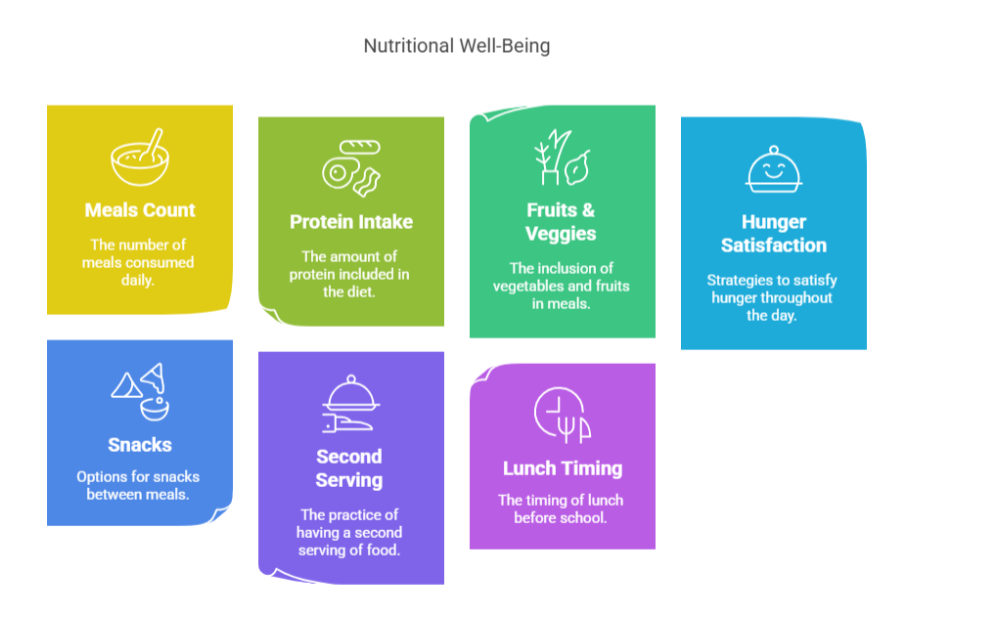
A series of Focus Group Discussions (FGDs) conducted with a group of children in Bhojpur Municipality indicated that children are aware of the importance of consuming green leafy vegetables and maintaining balanced diets. However, as also observed in other studies, awareness does not always translate into consistent dietary practice (Sigdel & Giri, 2024). The baseline dataset reflects a similar pattern where knowledge of balanced diets coexists with moderate achievement scores for protein intake. Cultural attitudes toward certain foods may also prevent children from consuming nutrient rich options even when available, thereby constraining nutritional outcomes (Sharma & Sharma, 2024).
Evidence from the study also shows that many children report regular availability of meals and relatively high ability to satisfy hunger. Meal frequency scores remain consistently high across well-being freedom and well-being achievement domains, suggesting relative stability in basic household food provisioning. However, when dietary diversity is considered, particularly protein intake and consumption of leafy vegetables and fruits, slightly lower scores emerge. Children frequently report that meals are available, yet report comparatively lower freedom to influence whether their meals include protein or fruits and vegetables. This suggests that intra-household decision structures influence dietary composition even where food itself is present.
Gender differences appear within these patterns. Boys report slightly higher ability to include protein in their diet and slightly higher achievement in consuming fruits and vegetables compared to girls. Girls report similar levels of meal frequency but slightly lower perceived choice regarding dietary composition. Differences remain small but consistent across indicators related to protein intake. These subtle disparities in requesting additional servings suggest that gendered social norms act as a ‘conversion factor’ that limits a girl’s ability to turn available food into nutritional achievement. These patterns suggest that even when households maintain similar meal routines for boys and girls, subtle differences may exist in how children express hunger, request additional servings, or influence what is served. Children also report slightly lower agency in deciding whether they can eat snacks between meals or ask for additional servings of food when hungry. This suggests that the expression of hunger itself may be shaped by behavioural expectations regarding appropriate eating practices for children. From a capability perspective, this demonstrates that nutritional well-being depends not only on availability of food but also on the freedom to act upon hunger.
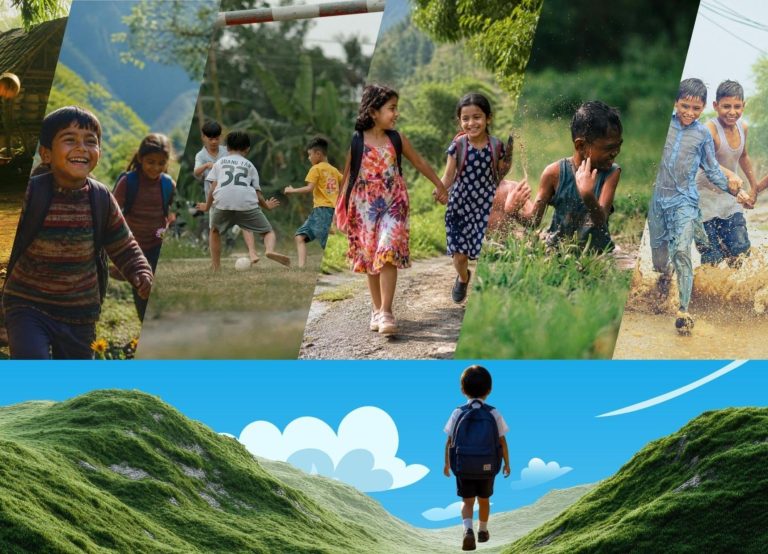
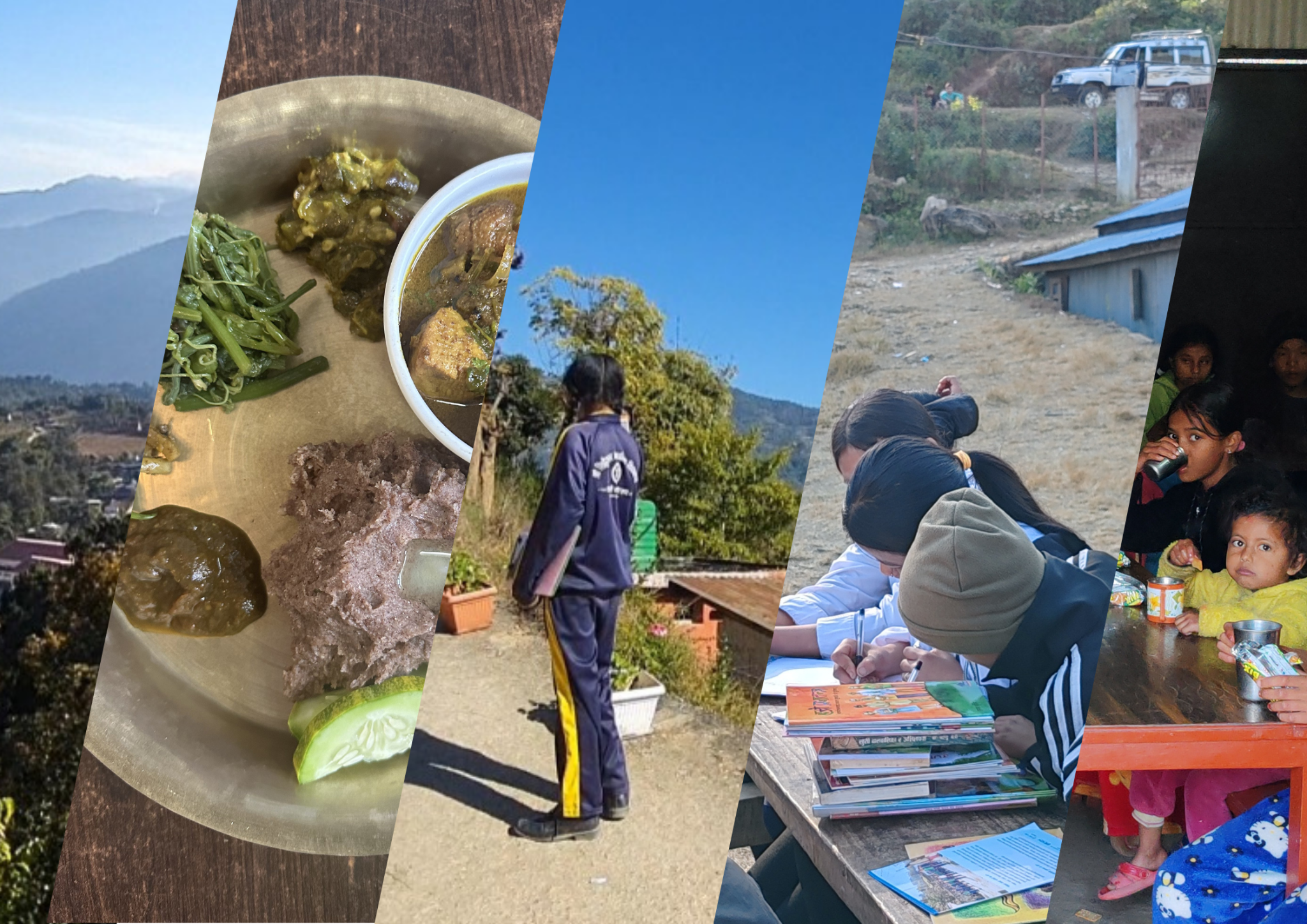
Walking to school is a part of the daily routine for many school going children in the hilly districts of Nepal, and these walks may take anywhere between 30 minutes to two hours. Observing the children walking along those steep paths every morning, and dutifully returning home in the evening, reflects their aspiration to pursue education. However, the physical demands of the terrain increases their energy expenditure even before the school day begins. For children living far from school, timing and adequacy of meals becomes particularly important. Here, the findings show relatively high achievement scores for eating before coming to school, suggesting that households attempt to maintain morning meal routines. However, variation in children’s reported choice regarding eating before school suggests that timing of meals may still depend on household schedules, food preparation constraints, and caregiving responsibilities. For children who walk long distances, even small variations in meal timing may influence concentration, stamina, and classroom participation.
Among the many preparations required for daily schooling, the opportunity to eat a meal before school or during school hours remains one of the most important conditions shaping children’s capability to learn. Adequate nutrition affects not only physical health but also aspirations, classroom participation, attendance, and educational achievement. Literature demonstrates that access to adequate nutrition has causal effects on school attendance, participation, learning outcomes, and enrollment decisions (Shrestha et al., 2019). Food also contributes to social inclusion within school spaces, and shared meals reduce visible differences associated with income, caste, ethnicity, or family background, while creating opportunities for interaction and belonging.
Policy initiatives in Nepal such as the deewa khaaja (mid-day meal) provision allocating Rs. 15 per day for school meals, the National Health and Development Strategy, the School Health and Nutrition Program, and the Multi Sectoral Nutrition Plan III (2023 – 2030) represent important commitments toward improving child nutrition. However, implementation challenges remain visible in rural and hill districts due to infrastructural gaps, geographic difficulty, and uneven access to services (Sunuwar et al., 2025). Although government reports indicate that nutritious meals are distributed to approximately 3.3 million children across nearly 29,000 public schools (Sharma, 2023), children in hilly regions continue to experience constraints in accessing diverse and nutritionally adequate food. The evidence from this study suggests that the central challenge is not only whether food is available, but whether children possess meaningful opportunities to achieve nutritional well-being. Capability gaps between freedom and achievement remain visible in indicators related to protein intake, dietary diversity, and ability to request additional food. These gaps indicate that nutritional outcomes are shaped by household decision-making dynamics, social norms around food practices, institutional arrangements, and environmental conditions.
While global debates on food security often focus on aggregate availability of food, children’s lived experiences in hill regions demonstrate that nutrition well-being depends equally on stability of meals, diversity of diet, timing of food intake, social acceptance of expressing hunger, and the degree of agency children exercise within households. Understanding these multiple dimensions helps identify where constraints exist and how interventions may better support children not only to be fed, but to be adequately nourished in ways that sustain both educational participation and broader well-being across their life course. If food security continues to be assessed only through the presence of a meal, important constraints linked to geography, gender relations, and social expectations remain overlooked. For children living in the hills of Nepal, nutrition shapes their capacity to participate in schooling and to sustain their educational aspirations. Supporting these aspirations requires moving beyond a narrow focus on calorie provision towards strengthening each child’s real opportunity to access diverse, adequate, and choice-based nutrition. Policies must therefore focus not only on feeding children, but on expanding their nutritional freedom as well.
References:
- Sharma, N (2023). The writing is on the wall in Nepal. School Meals Coalition. Retrieved from https://schoolmealscoalition.org/stories/writing-wall-nepal
- Shrestha R.M., Ghimire, M., Shakya, P., Ayer, R., Dhital, R., and Jimba, M. (2019). School health and nutrition program implementation, impact, and challenges in schools of Nepal: stakeholders’ perceptions. Tropical Medicine and Health. 47. 10.1186/s41182-019-0159-4.
- Sharma, D. and Sharma, R. (2024). Nutrition through the Lens of Human Development-Capability Approach: Conceptual Framework and Its Application. Global Journal of Health Science. 16. 13-13. 10.5539/gjhs.v16n12p13.
- Sigdel, A., & Giri, M. (2024). Assessing the Role of Nutrition Knowledge in Shaping Dietary Practices Among Secondary Level School Students: Implications for Healthcare Management. International Journal of Atharva, 2(2), 85–95. https://doi.org/10.3126/ija.v2i2.70212
- Sunuwar, D., K.C, D. and Chaudhary, N. (2025). Nutrition Education Among Adolescents in Nepal. 10.1007/978-3-031-32047-7_179-1.