“Access to education is growing, but meaningful inclusion is still catching up. A baseline study by the Learning, Innovation, and Knowledge Exchange (LIKE) Lab at Kathmandu University School of Arts (KUSoA) reflects how gaps in well-being, equity, and everyday school experiences continue to affect children’s well-being.”
Lalitpur, Nepal, 24 April 2026 | Baishakh 10, 2083
Baseline study findings on Children’s Valued Educational Capabilities (CVEC) and Gender Equality and Social Inclusion (GESI) were disseminated in Lalitpur on Thursday, 23 April 2026, revealing a significant gap between what children value and what they actually experience in schools.
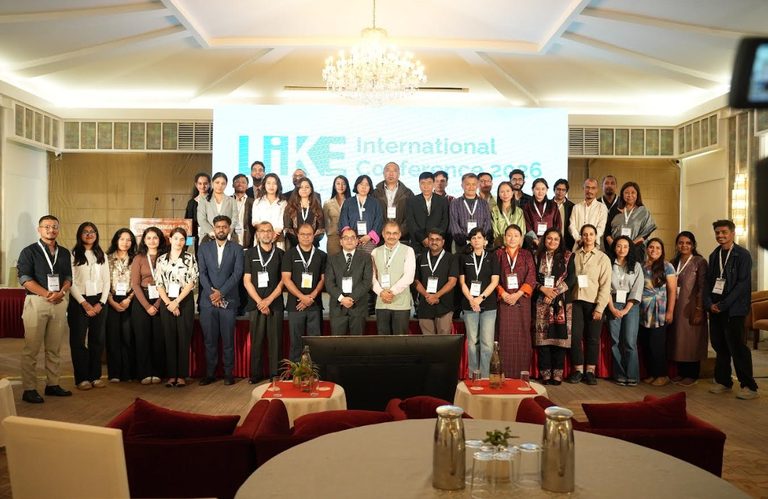
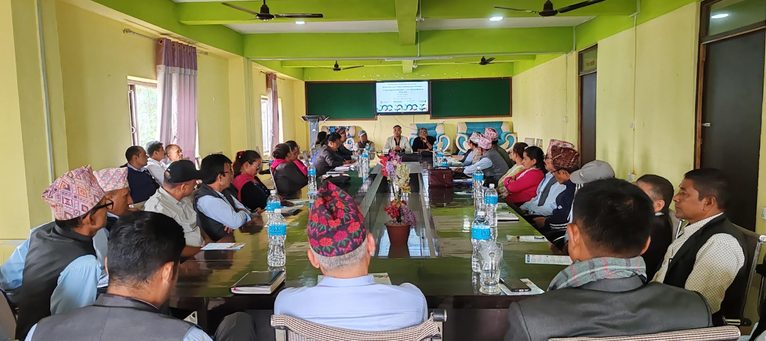
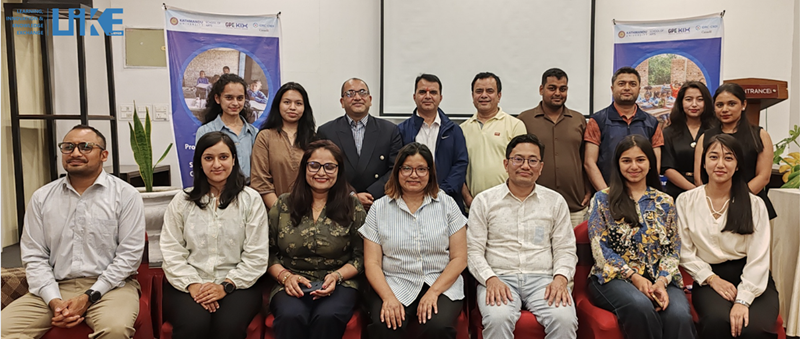
The Learning, Innovation, and Knowledge Exchange (LIKE) Lab at Kathmandu University School of Arts hosted a Knowledge Sharing Program (KSP) on Thursday, 23 April 2026, at Entrance Café, Chakupath, Lalitpur, bringing together educators, policymakers, and civil society representatives with the aim of disseminating key findings from the lab’s 2026 baseline study conducted in the community schools of Bhojpur, Nepal. The baseline study is one of the outputs of the lab’s ongoing research-for-development project titled “Promoting Gender Equality and Social Inclusion in Schools, Building on What Children Value and Aspire To Do and Be.”
Dr. Binayak Krishna Thapa, Principal Investigator of the project, opened the session by welcoming the attendees and providing an overview of the ongoing project and its objectives and setting the context for the knowledge-sharing session. Ms. Yamuna Basnet, a Research Fellow at the lab, then presented the findings of the baseline study. Grounded in Amartya Sen’s Capability Approach, the study documents the initial status of GESI in selected community schools of Bhojpur Municipality using a GESI diagnostic framework survey tool. Conducted across 13 public schools with 380 students from Grades 1 to 10, the baseline study offers a critical reference point on students’ lived experiences, everyday school practices, and access to equitable and inclusive learning environments.
The session aimed to deepen understanding and application of GESI in educational research, with a particular focus on children’s aspirations, well-being, and agency. It also served as a collaborative platform to foster dialogue and knowledge exchange among institutions working toward inclusive education.
The Schooling Gap: What Students Value Isn’t What They Get
Ms. Basent shared that students consistently placed higher importance on different aspects of their well-being than what they reported experiencing in school. While education, physical health, and social relations show relatively stronger support, gaps remain in areas such as mental well-being, autonomy, and religion and identity, where children attach high importance but report weaker experiences in practice.
She also pointed to infrastructure-related concerns, noting that while separate toilets are commonly available, gaps remain in the quality of facilities and access to sanitary pads. Disability-friendly infrastructure stood out as the weakest area, with low levels of both availability and satisfaction, which highlights continuing challenges in making school environments fully inclusive.
Gap Between Opportunities and Realized Outcomes
Ms. Basnet noted that opportunities, understood as “freedoms,” consistently remain higher than what children are actually able to achieve. She pointed out that areas such as nutritional well-being, autonomy, mobility, and bodily integrity fall at the lower end of outcomes. The gap reflects that access to resources alone does not translate into improved well-being, as social and institutional barriers continue to limit what children can meaningfully achieve.
Persistent Inequalities Across Groups
Ms. Basnet also drew attention to disparities across gender and ethnic groups. Boys generally scored higher across most domains, while girls performed better in nutrition and mental well-being but lagged in mobility, participation, and autonomy. Ethnic differences were also evident, with Dalit children recording the lowest outcomes across multiple areas, followed by Janajati students, while Madhesi children showed comparatively higher scores in domains linked to bodily integrity and autonomy.
From Dialogue to Action
The session concluded with active discussions among participants on how these findings can inform future interventions and policies. There was a shared emphasis on the need for targeted efforts to address the barriers faced by girls and marginalized communities. Participants also highlighted the importance of engaging schools, families, and local governments in creating more inclusive learning environments. The use of child-centered tools like CVEC was recognized as a valuable approach to guide planning and decision-making.
Lastly, before the event concluded, Dr. Thapa reaffirmed that the baseline serves as an important starting point for future interventions, including school-based activities, capacity building, and policy engagement. He extended thank-you remarks to all attendees, acknowledging their active participation and contributions, and emphasized the importance of participatory knowledge exchange and collective learning. The session closed with a shared commitment to ensuring that education systems not only provide access but also create environments where all children can thrive to the best of their capabilities.