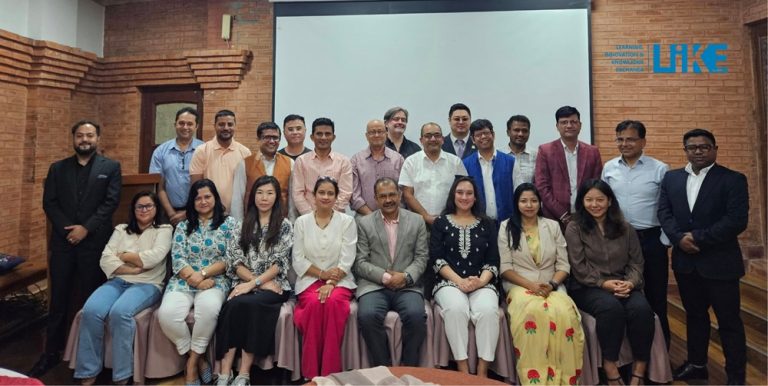
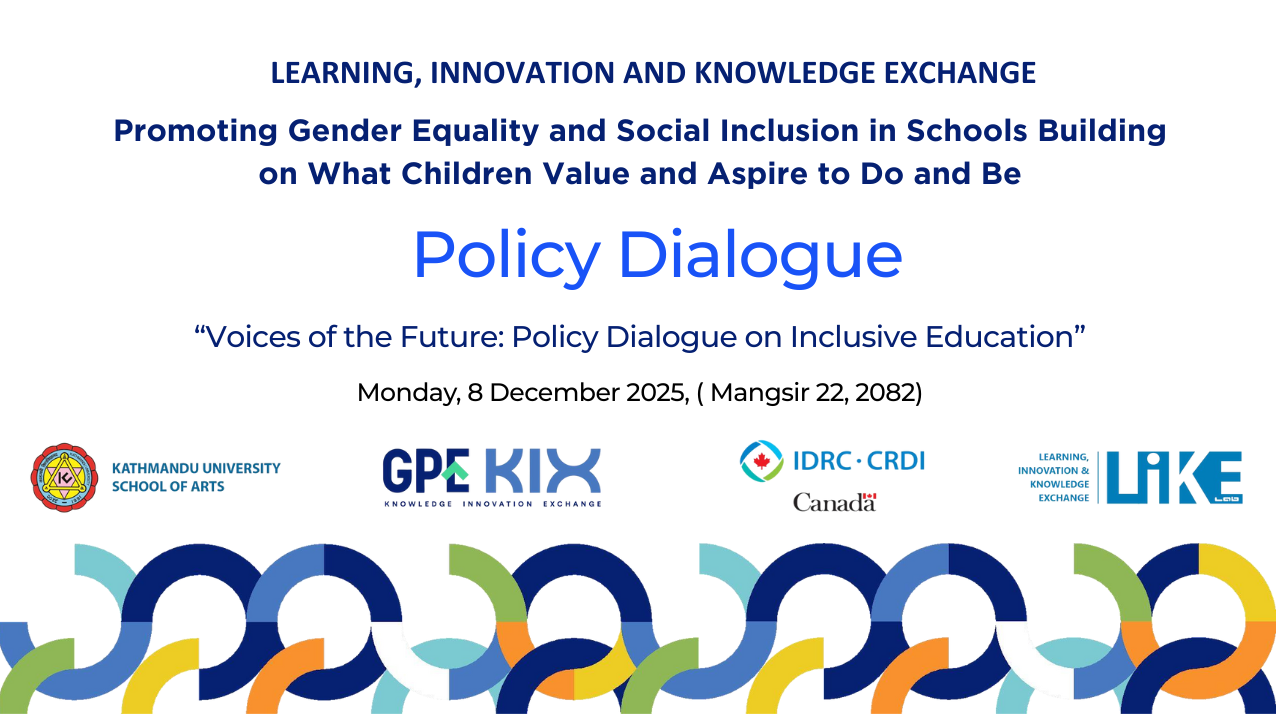
HATTIBAN, LALITPUR, 8th December, 2025 – A Policy Dialogue on Inclusive Education convened researchers, civil society representatives, and development practitioners to reflect on persistent barriers and emerging opportunities for advancing inclusive and equitable education in Nepal.
The dialogue presented key insights from two policy briefs – Outputs of the “Promoting Gender Equality and Social Inclusion in Schools, Building on What Children Value and Aspire To Do and Be (CVEC Project)”.
Policy Brief 1 – Beyond Access: Building Aspirational and Inclusive Education Pathways for Girls and Children with Disabilities in Nepal, revealed that while 91.4 percent of girls are enrolled in school, dropout rates increase sharply after age 11 due to menstruation stigma, early marriage, and domestic labor. Enrollment among girls with disabilities stands at only 54.1 percent, with even lower participation among children with multiple or psychosocial disabilities. Structural barriers such as poverty, child labor, limited assistive technologies, and shortages of female teachers continue to undermine inclusion.
Policy Brief 2 – Advancing Inclusive Education in Nepal: Addressing Out-of-School Children, Child Labor, and Regional Learning Imperatives, underscored challenges including policy overlap, infrastructural gaps, teacher shortages, weak data systems, and urban–rural disparities in access to learning materials. The discussion also raised concerns over Nepal’s heavy reliance on donor funding and the risk of future financing constraints. Successful initiatives such as the Gifted and Talented Education (GATE) program, disability-focused scholarships, and Community-Based Rehabilitation (CBR) models were highlighted as evidence-based approaches to improving retention and learning outcomes.
Drawing on insights from SOWC 2025, the dialogue highlighted how poverty, inequality, stigma, and repeated crises—such as pandemics and climate shocks—limit children’s aspirations and push many into child labor or early marriage. Participants emphasized that while Nepal has progressive policies, including the Disability Act and Inclusive Education Policy, gaps in implementation remain a major concern.
The policy briefs discussed during the session are available on the GPE KIX Library and can be accessed here: https://www.gpekix.org/library?search_api_fulltext=&field_topic=All&year=All&country=68&library_project_hub=All