Author: Yamuna Basnet
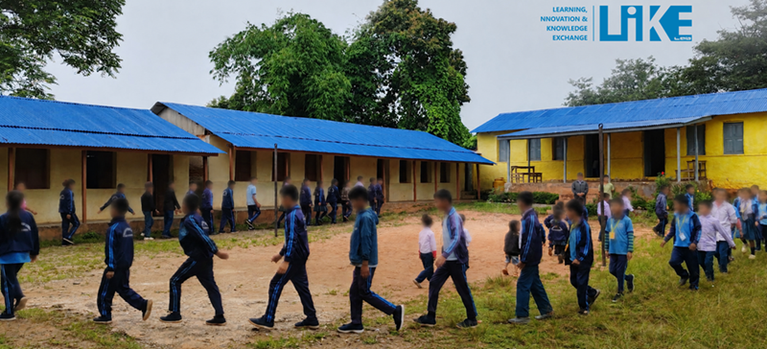
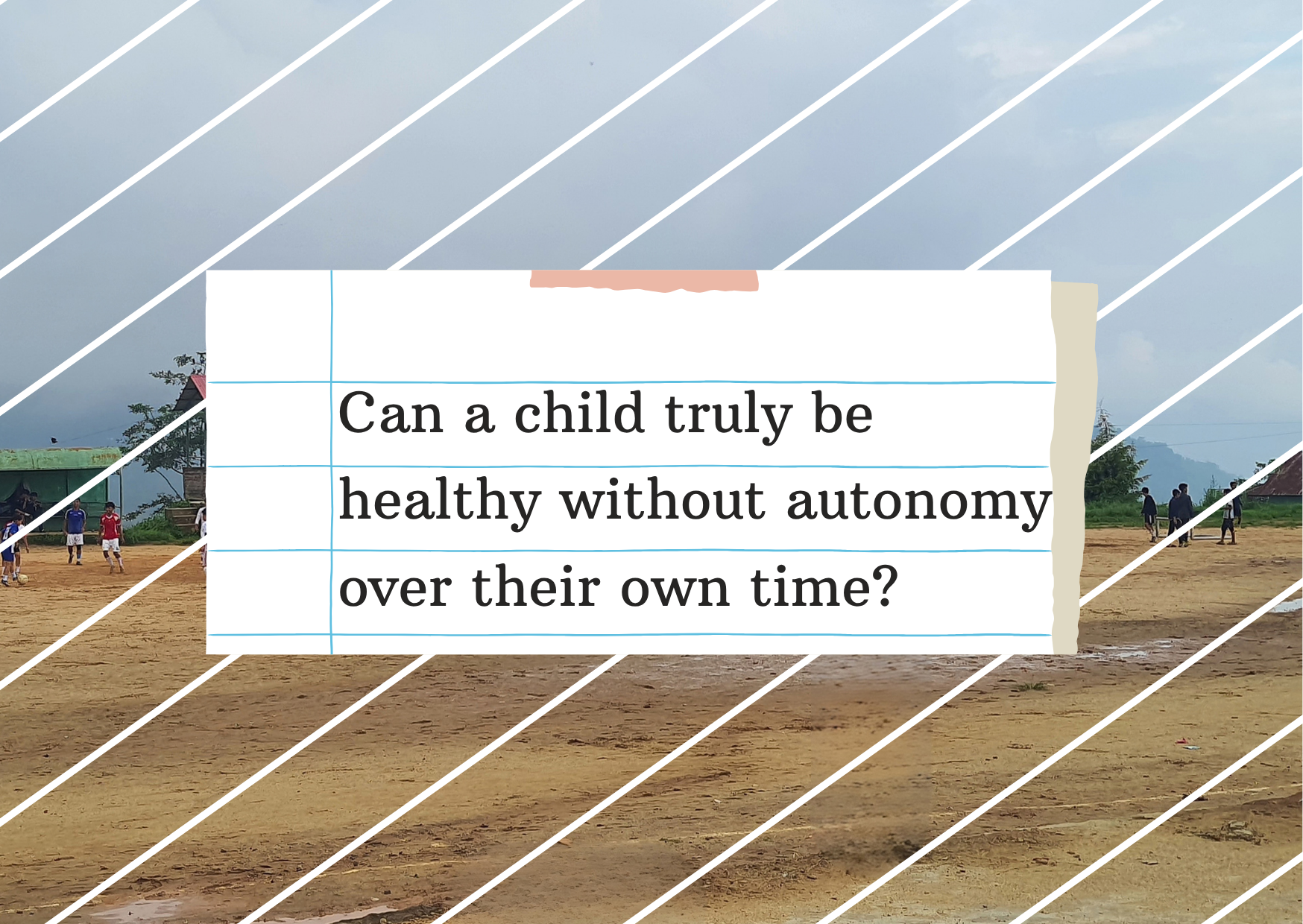
In Bhojpur bazaar, the tudikhel fills up with school aged children by the late afternoon. A net may or may not go up, but a game of volleyball or football with whoever’s around to play is a given. The shopkeepers watch on from their perch inside their stores, someone’s grandmother is drying grain on a tarp nearby, and the game goes on until the late evening. While it looks like a perfectly ordinary day, it is also one of the clearest places to see what physical health looks like for a child here.
For children in Bhojpur, physical health is not simply about being free from illness. It involves having the opportunity to exercise, access health care when needed, live in a clean environment, and get enough rest. It also involves having some say in the conditions and practise around them that shape their everyday health, whether that be choosing to join a football game after school, accessing health facilities at their school when needed, or simply being able to go to bed at a reasonable hour instead of staying up late to finish their day’s chores.
A series of Focus Group Discussions conducted ahead of our 2025 baseline survey made it clear that children are not short on knowledge related to their health. Boys talked about physical training, yoga, sports, exercise, nutritious food, personal cleanliness, and keeping their home and surroundings clean. They tied health to everyday habits like waking up early, jogging, and taking responsibility for their own bodies. Girls raised similar points like exercise, yoga, morning walks, sports, balanced nutrition, personal hygiene and added practices like cutting nails, drinking enough water, and understanding good touch and bad touch as part of staying well. The gap we see here is therefore not related to what children understand, but rather about what their everyday environments let them do with that understanding.
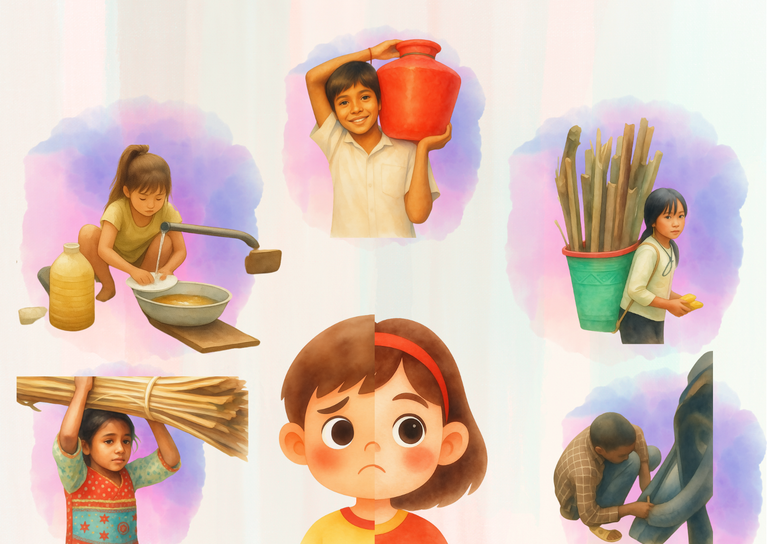
The baseline findings also track closely with what the children described in some areas. Children generally reported having opportunities to take part in school based physical activities and be in a clean school environment, and their actual experience of doing so was broadly consistent with those opportunities. We can therefore understand here that exercise and school cleanliness are a working part of most children’s daily lives. However, other areas tell a different story. The access to medical facilities and health checkups shows a wider gap between children’s ability to get support and what they actually experience, where sleep shows the widest gap of all. Compared to every other dimension of physical health surveyed, children reported lowest levels both of being able to get at least ten hours of sleep and of actually getting it. A child waking up early and walking an hour each way to school is a child whose health is largely being shaped by forces outside the school gates. Various factors like terrain, distance and household demands also play a big role outside of what the school itself provides.
When we look at it theoretically, the Capability Approach offers a useful frame here where rather than measuring health purely in clinical outcomes, and whether he or she is sick or not, it asks whether the child has the real, practical freedom to convert their circumstances into a life they have reason to value. A child who knows how to stay healthy but lacks the conditions to act on that awareness has the knowledge, but not the capability. This is an important point as it shifts the question from “what do children know” to “what can children actually do”. The agency related data in the baseline survey also links to this. Children generally reported being able to choose to participate in physical activities, request medical assistance when needed, voice their views about school health and hygiene, and take action to improve cleanliness. However, sleep, again, breaks the pattern here. Being able to sleep sufficiently doesn’t appear to translate into control over the actual conditions that determine when and how long a child actually sleeps. A child cannot simply decide to sleep more when he has to get up hours early to head to school, or conversely, stay up till late at night to complete his homework. The capability approach is thus designed to notice these gaps between opportunity and functioning, where agency runs up against circumstances a child did not choose for herself, and often cannot change alone.
The findings also point out some gendered differences. Girls reported somewhat stronger opportunities and experiences around school cleanliness and access to health support while boys reported somewhat stronger agency in physical activity and sleep related areas. While these differences are modest, they remind us that physical health is not something of a uniform experience, and children can find themselves better supported in some freedoms than in the others. Taken together, the overall findings show that children already know a great deal about what supports physical health. The question now is not whether children know how to stay healthy, but whether their everyday environments from the school compound to the walk home after dark give them enough opportunity, support, and room to act on what they already know.
Seen this way, physical health is about more than preventing illnesses. It is about having the conditions to move, rest, stay clean, receive care, and participate in the decisions that shape one’s health conditions, and for many children in Bhojpur, the hills and the hours of the day actively influence those conditions more than one can imagine.
Note: This blog is an output of the project titled ‘Promoting Gender Equality and Social Inclusion in Schools: Building on What Children Value and Aspire to Do and Be,’ implemented by LIKE Lab, Kathmandu University School of Arts, with support from the Global Partnership for Education and Innovation Exchange (GPE KIX) and the International Development Research Centre (IDRC).
Disclaimer: The views and opinions expressed herein do not necessarily represent those of the International Development Research Centre (IDRC) or its Board of Governors.